by Dr. Kevin Dean, President & CEO, Tennessee Nonprofit Network
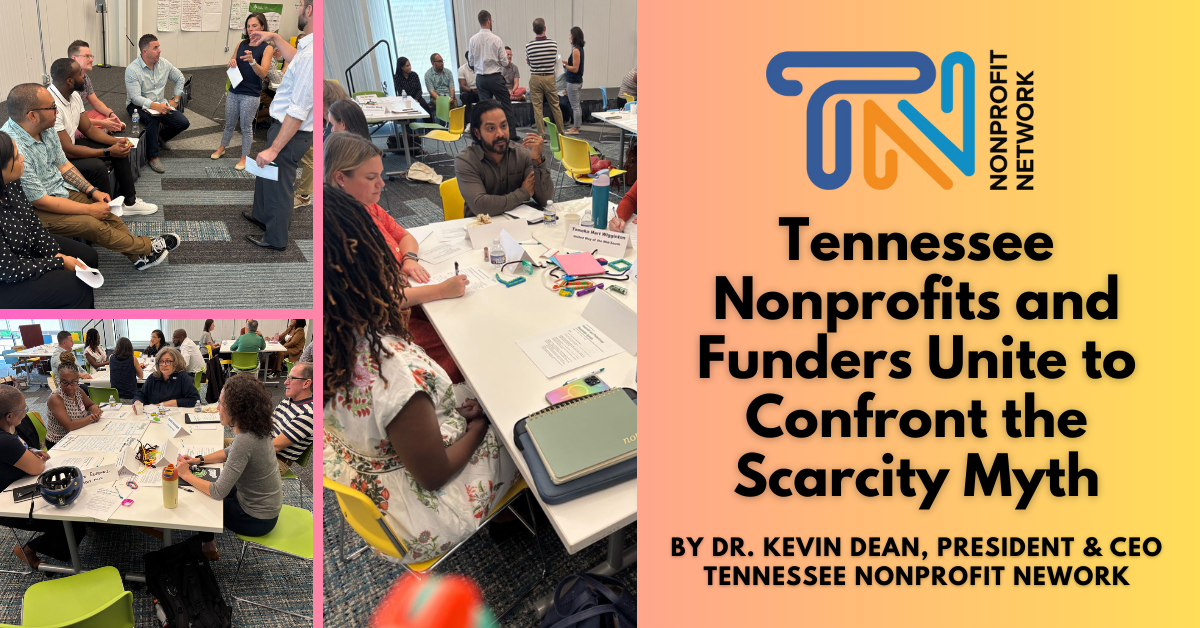
Nonprofit and philanthropic leaders from across Tennessee recently came together in Nashville for a pre-conference roundtable to address the pressing challenges facing the state’s nonprofit sector. Co-hosted by Tennessee Nonprofit Network and the Dan and Margaret Maddox Fund and facilitated by staff at Elevate Consulting, the event was a powerful testament to the shared commitment of both nonprofits and funders to move beyond traditional silos and work collaboratively toward a stronger, more resilient future for the state.
The central goal of the roundtable, held on August 27 the day before the Tennessee Nonprofit Conference, was to dismantle the long-standing myth that nonprofits and foundations do not want to be in the same room. By bringing together a diverse group of stakeholders—including prominent organizations like Community Foundation of Middle Tennessee, The Sycamore Institute, United Way of the Mid-South, Hyde Family Foundation, The Healing Trust, and many others—the event created a vital space for open, candid, and productive dialogue.
A Sector at a Critical Inflection Point

The meeting underscored that Tennessee’s nonprofit sector is at a critical juncture. The discussions revealed a landscape marked by both new leadership and energy as well as significant fragmentation. While there is a clear appetite for collaboration and innovation, the sector is currently hindered by political polarization, competition for limited resources, and an underdeveloped capacity for statewide advocacy. The overwhelming consensus was that the sector needs a shared vision and a unifying champion to define effectiveness and represent the interests of nonprofits statewide. This call for a singular voice highlights a fundamental need for collective action over individual gain.
A key takeaway was the shared recognition that the nonprofit sector is an ecosystem, not a collection of competing entities. Participants emphasized that for the sector to thrive, it must embrace collective action and move away from a scarcity mindset. This shift in thinking is essential for addressing systemic issues and building a more sustainable and impactful future.
Diving Deep: Regional Challenges and Opportunities
The roundtable was structured to allow for both statewide and regional analysis, with leaders from Middle, West, and East Tennessee providing unique insights into the specific challenges and opportunities they face. This regional breakdown provided a nuanced understanding of how statewide issues manifest differently across the state.
Middle Tennessee
Leaders from Middle Tennessee highlighted a moment of both challenge and opportunity. While the region benefits from strong anchor institutions, new leadership energy, and a significant corporate presence, it also struggles with an over-saturated nonprofit landscape and a culture of “Nashville nice” that can hinder honest conversations about competition and collaboration. The group identified a pressing need for a champion and a collective plan of action to overcome a scarcity mindset and ideological differences. Opportunities for growth include mergers and collaborations, legal and structural support, and leveraging the influx of new people and money into the region.
West Tennessee
In West Tennessee, the focus was on the need for alignment among the large number of nonprofits, funders, and policy efforts. The region benefits from supportive practitioner networks and strong funders, but is challenged by a competitive funding environment and weak board development. Leaders emphasized the importance of investing in capacity building—especially in areas like storytelling, talent development, and leveraging technology like AI for fundraising and growth. The threats identified included shrinking federal funds and donor decline, making stronger corporate partnerships and policy advocacy critical.
East Tennessee
The conversation in East Tennessee revealed a strong desire for collaboration, with a particular emphasis on the importance of building relationships as a prerequisite for successful partnerships. The region’s strengths include an entrepreneurial spirit and a growing donor base, as well as strong engagement from universities, such as the University of Tennessee. However, the region grapples with fragmentation, a risk-averse philanthropic community, and workforce retention struggles. Participants noted the political landscape and national narratives about nonprofits as significant threats. Opportunities for the region include greater political engagement, creating nonprofit career pathways, and using data-driven convening to spur action.
Critical Areas of Focus and Next Steps

The roundtable did more than just diagnose problems; it identified key areas for collective focus and proposed concrete next steps.
Leadership & Workforce Development: A generational turnover is underway, creating a need for more robust training for emerging leaders. The sector’s talent pipeline is weak, and retention is a major challenge. Building a strong, resilient workforce is essential for long-term sustainability.
Funding & Resources: The sector’s reliance on public funding and a scarcity mindset creates fragility. While many organizations are struggling with limited unrestricted support, there is untapped potential in individual wealth, corporate social responsibility (CSR), and aligning funding strategies. The conversation highlighted a need for funders to be less risk-averse and more willing to provide flexible, multi-year support.
Advocacy & Perception: The value of nonprofits is often misunderstood by the public and policymakers. The group stressed the need for better storytelling and advocacy to manage the sector’s reputation and influence policy. Political divides and an underdeveloped advocacy capacity create a climate of fear and paralysis, which must be overcome to create a more supportive policy landscape.
Innovation & Technology: While AI and data-sharing are seen as significant opportunities, fear and a lack of shared resources prevent widespread adoption. The demand for statewide training and shared technological infrastructure is high, as these tools could help the sector overcome operational inefficiencies and better demonstrate impact.
Looking ahead, participants agreed on the necessity of ongoing, facilitated conversations to ensure these discussions lead to tangible results. The group proposed using asynchronous communication tools like Slack or Signal to maintain momentum and identified the need to bring in additional participants to broaden the conversation. Distributing the learnings through blog posts and other public summaries was also seen as a crucial step in building a wider, more inclusive movement.
Why This Meeting Was So Important
This pre-conference roundtable was not just another meeting; it was a pivotal moment for Tennessee’s nonprofit and philanthropic communities. It demonstrated a collective will to break down historical barriers and acknowledge the interdependence of a vibrant nonprofit sector. By putting aside individual agendas, participants created a foundation for a new era of collaboration.
The meeting’s emphasis on a shared vision and a unifying champion is particularly powerful. In a state as diverse as Tennessee, with distinct regional identities and challenges, a coordinated, statewide approach is not just a good idea—it’s an absolute necessity. The issues facing nonprofits, from funding volatility to talent retention, cannot be solved by individual organizations or even single regions alone. They require a cohesive, statewide strategy.
The candid conversations about the strengths and weaknesses of each region’s nonprofit landscape are invaluable. They provide a roadmap for targeted interventions and resource allocation, ensuring that solutions are tailored to local needs while remaining part of a larger, coordinated effort. The willingness of leaders to openly discuss sensitive topics like competition and risk-averse philanthropy signals a new level of maturity and trust within the sector.
Ultimately, the roundtable proved that when nonprofits and foundations come together with a shared purpose, they can move past the myths and create a powerful, unified force for good. The day’s work laid the groundwork for a more collaborative, resilient, and impactful nonprofit sector in Tennessee, one that is better equipped to meet the challenges of today and build a brighter future for all.